In 2023, digital marketing is necessary for any business that wants to increase the number of customers, increase brand awareness, and increase profit in general.
In the age of the internet, traditional marketing competes with digital marketing. Being newer, but also very dynamic and complex, online promotion has a specific terminology and a special knowledge. Marketers are familiar with them, but it’s essential for entrepreneurs to absorb this knowledge as well, even if they’re working with an agency. In this article we offer some simple and useful explanations of some marketing terms that you need to understand when you have an online business.
-
Marketing objectives
These are the essential part of a marketing strategy. It is important to clearly define the point you want to reach and, depending on it, to be able to develop a plan. Goals help you monitor every step and evolution of your strategy, confirm your efforts, and help you stay in control.
In order to be able to set these goals correctly, marketers use the SMART method. Specifically, this means that the objectives must be Specific, Measurable, Approachable, Relevant and Time-bound. SMART is an effective organizational tool. It provides clear benchmarks to address in brainstorming and involves all the dimensions necessary for the goal to be set effectively and clearly.
-
Marketing Plan
It is what sets the directions that the company will follow to achieve its SMART goals in a certain period of time. Why do we need a marketing plan? Well, without it we wouldn’t have a clear and easy-to-monitor structure for what we want to do.
A marketing plan is based on three questions: Where do we stand at the moment? Where do we want to go? and How can we get there?. With the help of the plan we can measure progress on specific time intervals and we can better understand certain factors that could have an impact on success, useful knowledge in the future.
-
KPI’s (Key Performance Indicators)
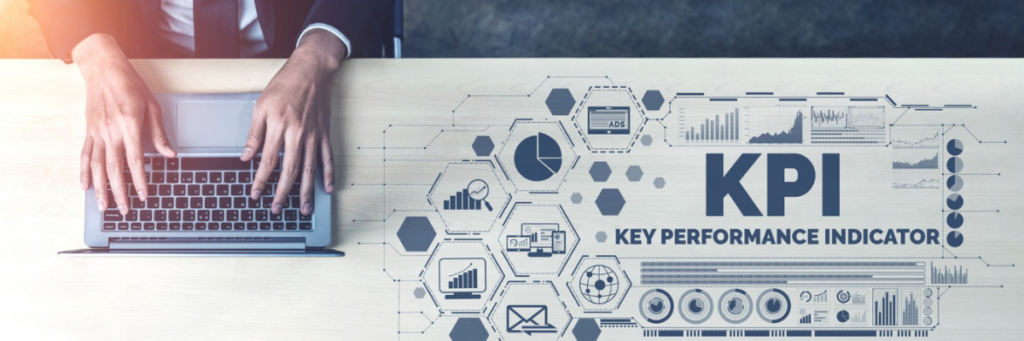
Translated into Romanian as Performance Indicator, the KPI is a tool for measuring and monitoring actions. KPIs are a set of metrics that reflect the performance of the practices used in relation to the objectives set in the long-term marketing plan.
-
Brand vs. Branding
What is the difference between brand and branding? The brand is the perception that people have of a business, and branding is the active process of shaping that perception. A brand is not just a simple image, but the quality and overall reputation of a company: how people see it, whether they trust it, whether they would use its products or services to meet their needs. Branding is the process of building a brand, a marketing strategy that ensures that people’s response to these questions is positive.
-
Website
Technically speaking, a website is a set of interconnected HTML files that is accessible on the Internet via a web address or URL. Basically, a website is the “business card” of a business – a platform for presenting (or even selling) its products and services. It is an extremely important information resource for current and potential customers.

-
Social Media Platforms
Socia Media is a resource that much of digital marketing depends on. Each platform has its own specificity and requires a unique approach, appropriate to those we find there. Depending on the product/service you offer and, especially, depending on the target audience, it is good to channel your efforts to the right networks. There are also post formats for each type of platform. For example, for Instagram, carousel and reels are suitable. For Facebook – live and video, and for Linkedin are posts with a business to business (B2B) tone.
-
Search Engines
The technique and structure of search engines must be more familiar to you than to a generic user. The search engine is a program that stores the title, keywords and content of web pages in a database. Any search engine has three major elements:
- Search robot: is a program that targets web pages, reads them, and then tracks links to other pages.
- Index or catalog: This is where the information about each web page that the robot finds is written.
- Search software: allows searching through the multitude of pages registered in the Index.
Some examples of search engines: Google, Bing, Yahoo, Third Parties. Google also has search features for images, books, blogs, newsgroups, documents, quizzes, and web directories. Bing is the search engine offered by Microsoft. Like Google, Bing allows users to search the web for different resources.
-
Cookie
On a daily basis, as internet users, when we access a website, we are made aware of the use of cookies. But what are they? Cookies are files that store information about you, such as what type of browser you use and what kind of behavior you have on the internet.
What do we use cookies for? They are useful for performance monitoring. Specifically, they keep information about preferences both for analysis, number of users and website browsing trends, as well as for advertising analysis. They are relevant in delivering personalized ads, depending on a user’s preferences.
-
Visitors to the site
A person who visits the site and fills out a contact form or purchases a product is a Conversion. Thus, website traffic is an important thing for businesses that have a website for presenting or selling its products/services. In order to bring as many visitors as possible to the site, two types of sources are used: organic traffic or paid campaigns.

-
UI (User Interface) & UX (User Experience)
A successful UX is what makes a platform simple to use. User Experience is a whole process, undertaken with the help of analytical thinking, attention to detail, psychological knowledge and strategies to simplify the processes that customers go through to access the service or buy the product on the internet.
For example, in the case of web applications, websites or online stores, UX helps to improve the user’s processes and experience, providing them with a quick and easy operation, which can win them over as a customer.
UI is concerned with the aesthetic aspect and pleasant interactions, which are convincing (through graphic design, layout, typography). The time spent on a platform depends on the visual imprint it leaves: a well-selected color palette, dynamic elements, clean and good-looking texts are essential. Visual communication, which is very important in digital marketing, is improved through UI strategies.
-
Sales funnel
A sales funnel consists of each step that a person must follow, in order, to become a customer. It is made up of three sections: TOFU (the connection between user and seller), MOFU (creating the trust environment between seller and buyer), and BOFU (turning the user into the customer).
-
PPC (Pay Per Click) Campaigns
They are paid campaigns that help you bring relevant and fast traffic to your business website. The implementation of a PPC campaign in the Ads platform is based on the keywords that users enter into search engines. Every time a user clicks on the implemented ad, the one who created the ad is charged. The most used platforms on which PPC campaigns can be implemented are Google Ads and Facebook Ads. Targeting can be done according to several criteria: the type of browser, device, the language people speak, geographical position, their gender and other interests.
-
SEO (Search Engine Optimization)
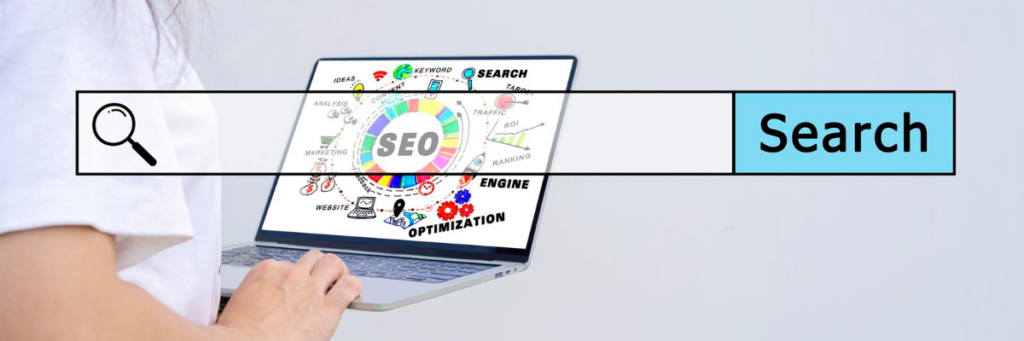
SEO techniques help search engines better understand your offer. A search engine returns paid and unpaid results. It has algorithms that sort the lists of results, which constantly search the internet for new and relevant content. The words you use on your website influence its position among impressions. Keyword research is therefore necessary. It’s important to discover the keywords that people type in when looking for services or products similar to yours.
-
CPL and CPA
Cost Per Lead measures how profitable marketing campaigns are when it comes to generating new leads. A lead is a person who has expressed interest in the product or service you offer. Cost Per Action is a metric that measures how much it costs to generate an action through advertising.
-
Reach & Engagement
Reach is the term used for how many people see a post, and Engagement is the term used for how many people interact with the post (by like, comment, share).
So, this article serves as a small introduction to the world of digital marketing. Of course, the field is much deeper than that, and specialized marketers know all the actions that must be taken to use this important promotional resource. A marketing agency can be the reliable partner towards generating profit, and any entrepreneur must be aware of the need for such collaboration today.